How I Used AI to Take the Chaos Out of Dinner Part 1
Part 1 – Slightly Overengineered Meals: How a Simple Prompt Snowballed Into a Family System
For a long time, dinner at my house followed a familiar pattern:
- No plan.
- Everyone’s hungry.
- We make the easiest thing in sight.
- Leftovers die in the fridge.
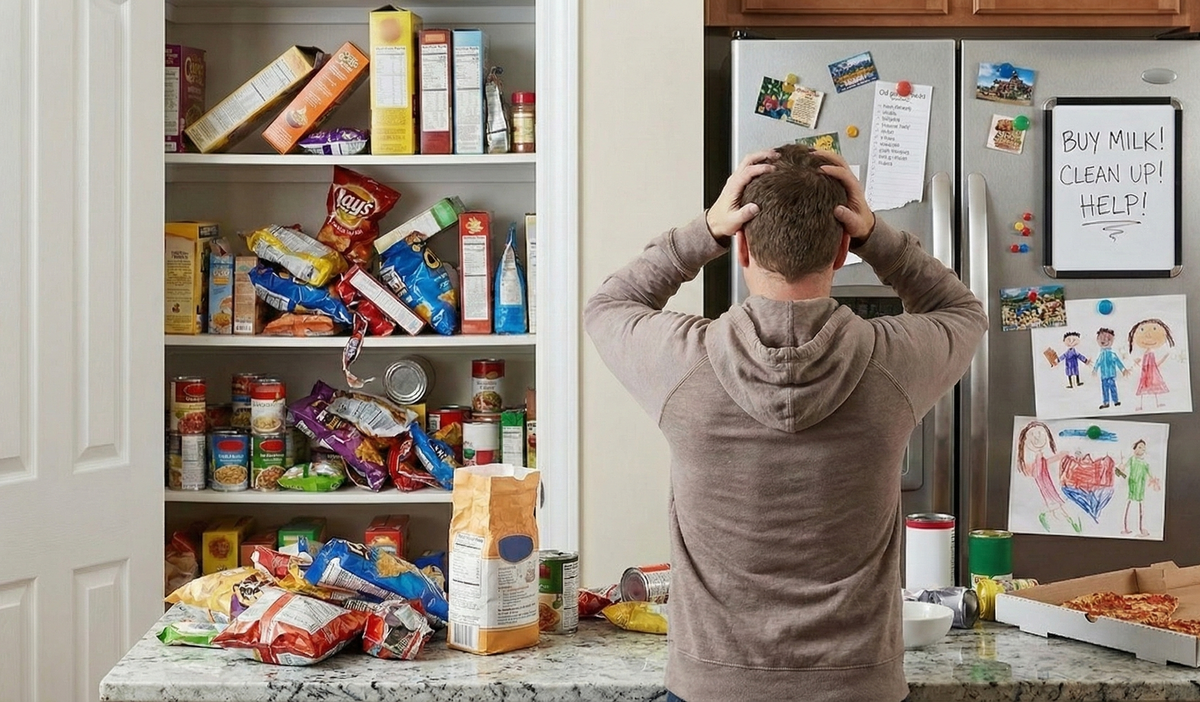
I was trying to lose weight. The kids weren’t cooking or eating leftovers. The pantry looked like a museum of abandoned ingredients. Every weeknight felt like a mini crisis.
Don’t care about the backstory and just want the build details?
👉 Skip to Part 2 – Under the Hood: How the Meal Prep Engine Actually Works
I didn’t set out to build some elaborate “Meal Prep Engine.” It started with one very practical message to an AI:
“I need to meal prep again. My goals are to be affordable, high protein, high fiber, under 650 cals. Needs to fit in 2 cup meal prep container. I need to fill 10 containers. If we could do something like a primary protein that's shared among multiple containers but mix up the remainder of the dish to provide variety. I’d also prefer these to not be overly complex. I’d like to meal prep these in less than 2 hours.”
In that moment, I wasn’t trying to fix family dynamics or teen skills or pantry waste.
I just wanted 10 solid meals I could grab from the fridge without wrecking my diet.
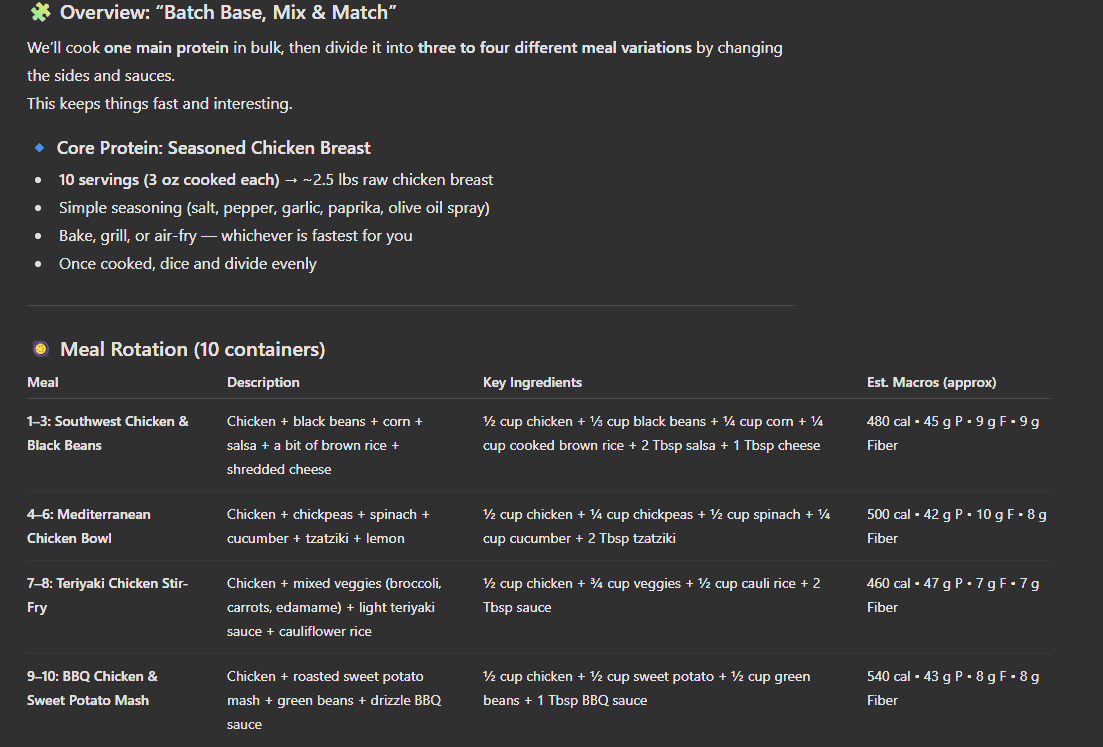
Step 1 – Fixing My Meals
That first run did something important: it proved the concept.
The AI came back with ideas that:
- Used one main protein across several meals.
- Mixed up carbs, veggies, and flavors so each container felt different.
- Stayed within my high protein / high fiber / <650 cal targets.
- Looked realistic to cook and portion in under two hours.
I cooked, portioned, and filled 10 two-cup containers. For the first time in a while:
- My lunches were handled.
- I wasn’t improvising or grabbing junk.
- I had something I could just grab and eat.
Once that was solved, another problem bubbled up: my sweet tooth.
Step 2 – Healthy Sweets for the Sugar Goblin
Even with good lunches, cravings were still a thing.
If there’s nothing planned for those snack moments, I will absolutely go on a kitchen scavenger hunt. So the next ask to the AI was:
- Help me build high-protein, lower-calorie “sweet” options
- That I can prep alongside the main meals
- So I can crush cravings without nuking my progress
The AI started suggesting:
- Protein-friendly dessert bowls
- Snacks built around Greek yogurt, fruit, nuts, cocoa, etc.
- Ways to reuse ingredients from the main plan so I wasn’t buying a whole second list
Now the weekly pattern looked like this:
- 10 main meals in containers
- A few healthy sweets to defuse the “I need something sweet” urges
That alone made a massive difference in how my week went. Once those two pieces were working, it was hard not to look at the bigger picture.
Step 3 – From “My Food” to “Family System”
With my own food more or less on rails, the other problems got louder:
- The kids weren’t helping cook.
- Leftovers were still going to waste.
- Evenings were still chaotic.
- The pantry was full of “we’ll use this someday” items.
That’s when the idea expanded:
“What if I pre-prep all the proteins on Sunday,
and then let AI build teen dinners around those for the rest of the week?”
The goals:
- Time savings: cook once, reuse all week.
- Skill-building: teens follow recipes that start from prepped proteins, not raw meat.
- Less waste: use what we have, on purpose.
- Less chaos: no more 5:30 p.m. “what’s for dinner?” scramble.
So we set up the first full run of what would eventually become the Meal Prep Engine:
- My main meal prep.
- Healthy sweets.
- Teen dinner recipes that reuse the Sunday proteins.
- A grocery list to glue it all together.
Step 4 – The First Dry Run (PDF Era)
That first “full system” run looked like this:
- I gave the AI:
- My calorie/macro limits
- Container rules (2 cups, 10 meals)
- Pantry items to prioritize
- General cuisine preferences for the week
- I asked it to:
- Design my meal prep containers
- Add healthy sweets
- Build teen dinner recipes using Sunday’s proteins
- Generate a grocery list for everything
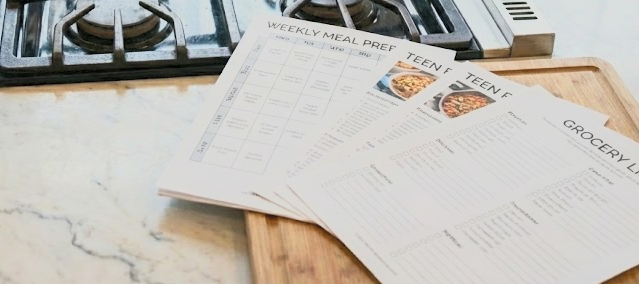
We had it generate everything as PDFs:
- A detailed meal prep night plan:
- What to cook first
- How to season
- How to portion into containers
- A packet of teen recipes:
- One for each weeknight
- Step-by-step instructions using the pre-prepped proteins
- A grocery list PDF organized so I could shop quickly
How It Went
- Meal prep went great.
- The food was genuinely good.
- The variety was enough to keep me interested.
- I stayed on track with my diet for the week.
And the teens?
Predictable reaction at first:
- Complaining.
- Eye rolling.
- “Why can’t we just make something easy?”
Then they actually cooked a real meal, with real ingredients, mostly on their own.
By the time they sat down to eat it, there was a subtle shift:
- It wasn’t just “food Dad made.”
- It was, “We made this. This is our dinner.”
It didn’t magically turn them into foodies, but it made a dent.
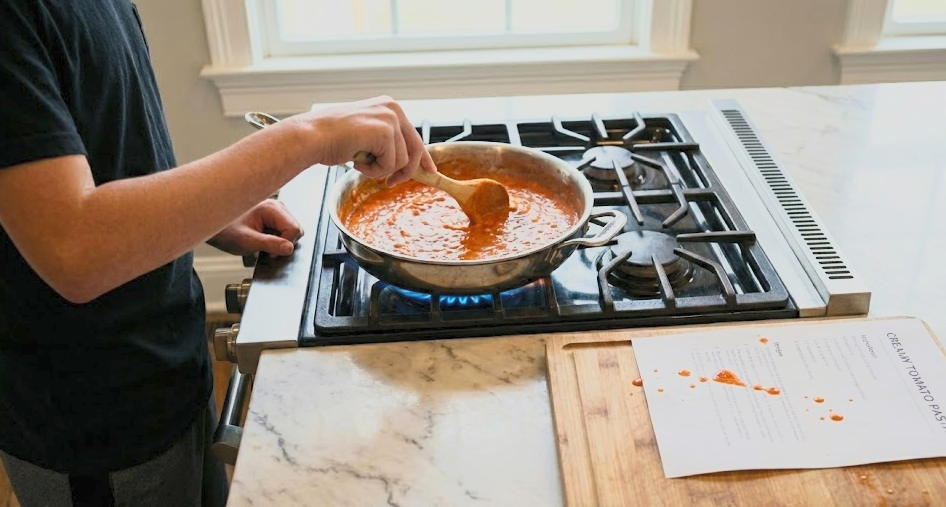
It was clunky and manual and very “version 1”… but it worked.
Step 5 – Science Corner: Turning Teen Dinners Into Lessons
Once the teen recipes were flowing, another idea clicked:
“If they’re already cooking, why not sneak in a bit of education too?” Alton Brown style...
So we started adding a small Science Corner to teen recipes:
- A short paragraph about things like:
- Why we sear meat before roasting
- What fiber actually does in your body
- How protein affects hunger and muscle
- Why certain cooking methods work better for certain cuts
Think of it like a tiny Alton Brown segment dropped into the middle of the recipe—just enough to explain what’s actually happening, not a textbook.
Science Corner: Here’s why we rest the meat before slicing…
Science Corner: Why this meal hits your protein and fiber goals…
It turns teen dinners into more than just “go through the motions.” They get context. They see cause and effect.
Step 6 – From One-Off Prompts to a Dedicated GPT
After a few weeks, the rough edges started to show:
- Some recipes were too similar week to week.
- The AI leaned on the same ideas too often.
- Units weren’t always “store-realistic” in the grocery list.
- PDFs felt clunky and manual.
- I had to keep re-explaining my constraints.
So we started asking bigger questions:
- How do we capture the rules once and reuse them every time?
- How do we stop repeating the same recipes?
- How do we review and adjust a weekly plan before generating all the details?
- How do we make this feel less like “a conversation I had once” and more like an actual agent?
That’s where the dedicated Meal Prep GPT came in:
- A defined role (expert meal prep chef + nutrition nerd + teen mentor).
- A reference instruction file (MealPrepInstructions.md).
- A history file (MealHistory.md) to track what we’ve used before.
- A consistent question → draft → review → generate → host pipeline.
And that’s where Part 2 comes in.
Next: Part 2 – Under the Hood: How the Meal Prep Engine Actually Works